
2009
for
Piano Trio
Richard Danielpour
Trio Cavatina
2009 Chamber Music Competition


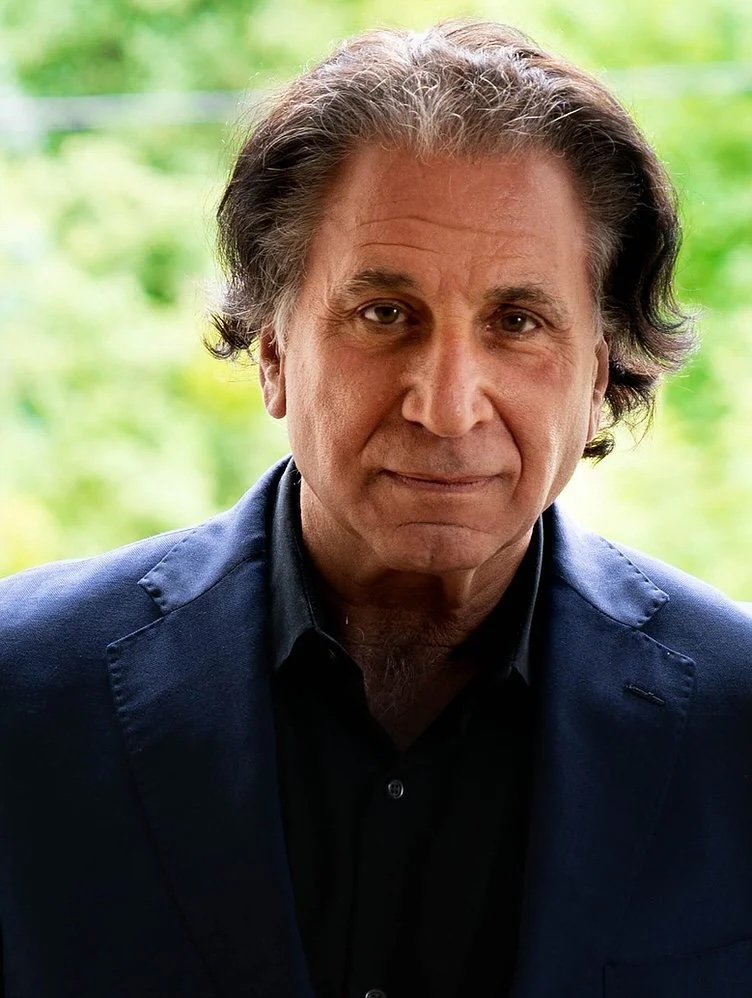
Richard Danielpour is an American composer of operas, orchestral and chamber works, and vocal music. He collaborated with Toni Morrison on Margaret Garner and has written for Yo-Yo Ma, Jessye Norman, and major orchestras. A Guggenheim Fellow and Berlin Prize recipient, he teaches composition at UCLA.
Six continuous movements give musical voices to figures in Picasso’s Guernica, following Danielpour’s encounter with the painting in Madrid in 2009.

Richard Danielpour is an American composer whose works include opera, orchestral and chamber music, songs, and large choral scores. Born in New York in 1956, he studied at the New England Conservatory and The Juilliard School, earning his doctorate in 1986. His teachers included Vincent Persichetti, Peter Mennin, and Leonard Bernstein. His first opera, Margaret Garner, was written with novelist Toni Morrison and premiered in 2005. Danielpour has composed for artists including Yo-Yo Ma, Jessye Norman, and Emanuel Ax, and for major American orchestras. His honors include Guggenheim and Charles Ives fellowships and the Berlin Prize. An active teacher and mentor, he joined UCLA’s composition faculty in 2017 after teaching at the Manhattan School of Music.
"When I was asked by Robert and Lucy Mann in 2009 to compose a work for the winning ensemble of the Naumburg Chamber Music competition, it was a special commission for me in that I had been asked 20 years ago to write a Naumburg commission but was unable to do so. "The Faces of Guernica' was an unusual work for me to write and it is the only piece that I have ever composed inspired by visual art.
In June 2009, I was on my way to Vienna with a layover in Madrid. I had the good fortune to spend some time wth my dear friends Dr. and Mrs. Vidal. Jose Manuel Vidal took me to the museum in Madrid the day I arrived, where I saw for the first time the famous Picasso painting, "Guernica." (The painting was created as a response to the bombing on the Basque town of Guernica, by German and Italian warplanes at the behest of the Spanish Nationalist forces in 1937. It shows tragedies of war and the suffering it inflicts upon individuals, particularly innocent civilians.) Although this painting, arguably one of the great works of visiual art in the 20th century, had been at the Museum of Modern Art for years, I had never seen it in New York. When confronted by the painting, I was overwhelmed by its size and emotional content. I had recently learned that I would be writing a work for the Trio Cavatina and knew that the work composed would involve this painting. "The Faces of Guernica" is my attempt to explore the individual characters within the painting and in so doing give each one of these figures a voice. I wanted the piece to be somber with dual sesibility. I wanted it to be brutal and beautiful at the same time. The work, written in six movements, should be performed without pause. I'm pleased to have had this opportunity to write "The Faces of Guernica" for the Trio Cavatina."