
1986
for
Baritone, Clarinet, Horn and Piano
Larry Allen Smith
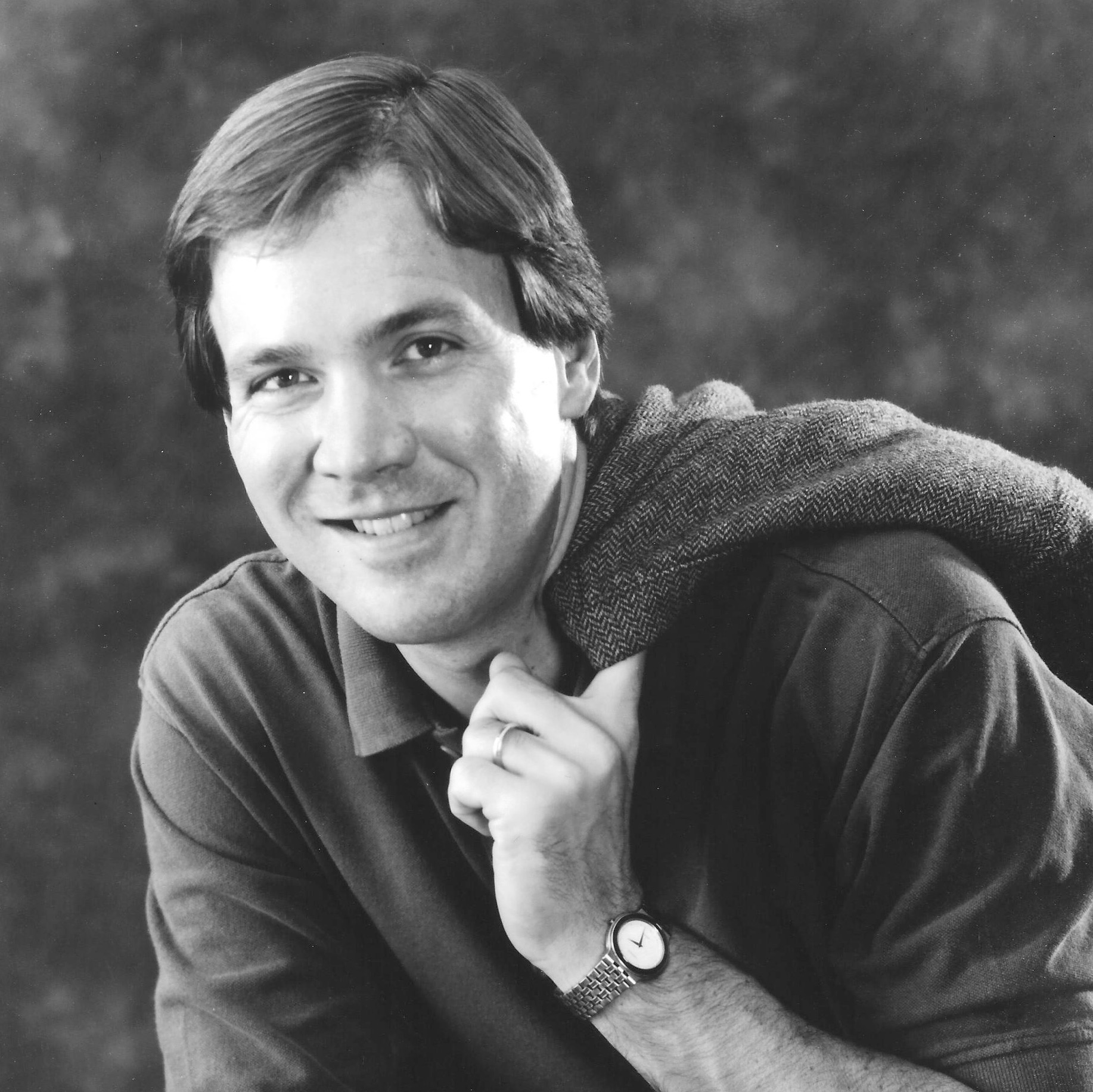
Christopher Trakas

1986 Cello Competition

April 8, 1986

Larry Alan Smith (born October 4, 1955, in Canton, Ohio) is an American composer, performer, educator, and arts executive. Praised by The New York Times after his New York debut as “a young composer of great gifts,” he has built an international career, with works performed and commissioned by leading soloists, chamber ensembles, and orchestras. He studied with Nadia Boulanger and Vincent Persichetti, earned BM, MM, and DMA degrees from Juilliard, and later taught on Juilliard’s faculty as well as at the Boston Conservatory. A prolific composer, he is represented by Theodore Presser Company and founded Tallow Tree Music Publishing. He has also held major leadership roles, including President of the School of American Ballet, Dean at the North Carolina School of the Arts, and twice Dean of The Hartt School, where he is now Professor Emeritus. He lives in Avon, Connecticut, with his wife, pianist Marguerita Oundjian Smith.
"I have always been extremely moved by histories, documentaries, and other accounts of war. Several of my works have addressed the horrors of armed conflict, but none has dealt with the dichotomies of war set forth in All Good Men. Youth and the search for the glories of war in the Melville poem are starkly contrasted with the experience of the war poet, Wilfred Owen, as he sees his fellow soldier die an agonizing death. At the root of this piece (and one's own patriotic dilemma) is the well-known phrase, Now is the time for all good men to come to the aid of their country."

Larry Alan Smith (Born in Canton, Ohio on October 4, 1955)
Following his New York debut concert, Larry Alan Smith was praised by The New York Times as “a young composer of great gifts.” Since that time, he has developed an international reputation as a composer, performer, educator, and arts executive. Many of today’s outstanding soloists, chamber ensembles, and orchestras have performed and commissioned works by Larry Alan Smith. Upon hearing the world premiere of his one-act opera, Aria da Capo, well-known Chicago-based critic Claudia Cassidy reported: “This is remarkable opera theatre . . . Smith has an ear for flaring brilliance . . . All this seems to me a true talent, primarily because I want to hear Aria da Capo again.”
He began his earliest musical training in Ohio and pursued his studies in France with Nadia Boulanger and at The Juilliard School with Vincent Persichetti. While earning his BM, MM, and DMA degrees at Juilliard, he was the recipient of several prizes, including the Joseph Machlis Prize for outstanding distinction in composition. During his final year of study, Dr. Smith was appointed to the faculty of The Juilliard School, where he taught from 1980-86. Previously, he was on the composition faculty of the Boston Conservatory.
An award-winning and prolific composer, Larry Alan Smith is represented and published by the Theodore Presser Company. This relationship also includes exclusive worldwide distribution and representation of the Tallow Tree Music Publishing catalog. Tallow Tree is a publishing company that Dr. Smith formed in 2005. Bourne Music, E.B. Marks, and Colla Voce Music also publish several of his works. He is a member of the American Society of Composers, Authors and Publishers (ASCAP), and is currently the President of both the Vincent Persichetti Society and the Lotte Lehmann Foundation.
In addition to his primary life as a composer, Dr. Smith is an experienced performer. He has guest conducted numerous orchestras and chamber ensembles in England, Brazil, Italy, Poland, Croatia, Germany, and the United States, and as a pianist, he frequently performs his own works. Dr. Smith has lectured extensively at institutions around the world.
As an arts executive, he has served as President of the School of American Ballet, Dean of the School of Music at the North Carolina School of the Arts, and Artistic and Executive Director of Wintergreen Performing Arts (and the Wintergreen Summer Music Festival). Dr. Smith has twice provided transformative leadership as Dean of The Hartt School at the University of Hartford where he is currently Professor Emeritus of Music Composition. He has served as the Music Director of Bowen McCauley Dance in Washington, DC, Artistic Director of the Associazione Musicale Peligna in Sulmona, Italy, and curator of The Hartt School’s prestigious Richard P. Garmany Chamber Music Series.
Larry Alan Smith was a Group XI Fellow of the Kellogg National Fellowship Program, a program of the W.K. Kellogg Foundation designed to expand the nation’s pool of capable leaders. He is the President of Berg Associates, Inc., a Connecticut corporation providing a variety of arts-related services to individuals and organizations.
Dr. Smith is a prolific poet who resides in Avon, Connecticut, with his wife, pianist Marguerita Oundjian Smith. They have four sons. Larry Alan Smith is a citizen of both the United States and Italy.
All Good Men
LARRY ALAN SMITH
Born on October 4, 1955, in Canton, Ohio Smith writes: "I have always been extremely moved by histories, documentaries, and other accounts of war. Several of my works have addressed the horrors of armed conflict, but none has dealt with the dichotomies of war set forth in All Good Men. Youth and the search for the glories of war in the Melville poem are starkly contrasted with the experience of the war poet, Wilfred Owen, as he sees his fellow soldier die an agonizing death. At the root of this piece (and one's own patriotic dilemma) is the well-known phrase, Now is the time for all good men to come to the aid of their country.
"The three-movement work, commissioned by Christopher Trakas, was completed in March of this year, and is scored for baritone, clarinet, horn, and piano. The first movement, built on the piano's persistent low D natural, serves as an introduction to the main body of the piece.
The other two movements follow with numerous march-like rhythms which are frequently transformed. In the second, the rhythms are triumphant and spirited, but in the final movement, the exhaustion is present in an unceasing two-note trudge over which the story unfolds.
"The piece is dedicated to the hope that my children and all the children of the world will never have to experience the realities of war."
—Larry Alan Smith
March 6, 1986

